
Back in 1776, the final days of October were rather…spooky.
It had nothing to do with Halloween. Sure, the Christian holidays of All Hallows Eve, All Hallows Day and All Souls Day were on the calendar, but those events had not yet morphed into the modern secular monstrosity that we celebrate today.
Nonetheless, the days were scary indeed for George Washington and his rag-tag Continental Army. They had recently gotten their butts kicked out on Long Island by the British army, and now they were being chased out of New York City by the British navy, and had to retreat north up the Hudson River. When they reached some higher ground near White Plains, they decided they had better turn and fight.
They fortified the town with breastworks using whatever material they had on hand, which included stuff as solid as cornstalks. And they didn’t have to wait long. On the morning of October 28, approximately 7000 British and Hessian soldiers approached the 3100 Americans, and launched repeated assaults on their positions. On the west end of the line at Hartsdale, the Americans were forced back, to a place called Chatterton’s Hill. They dug in and made their stand, and managed to repel several bayonet charges. But then, when they were attacked by Hessians soldiers to their front, and by surprise by British dragoon mounted infantry at their side, the right wing collapsed and the entire American line began to unravel.
And just like that, a fairly quick battle and another defeat. Fortunately, as they withdrew, the American retreat was covered by some brave rear-guard work from the 1st Delaware – the “Blue Hens” – and by artillery fire directed by some kid named Alexander Hamilton, which allowed most of the army to escape.
Perhaps more fortunately and even providentially, as the British prepared to follow up on their victory, on the night of October 31, a violent storm rolled in with high winds and an epic downpour that delayed their advance, and gave George Washington enough time to retreat in the direction of New Jersey.
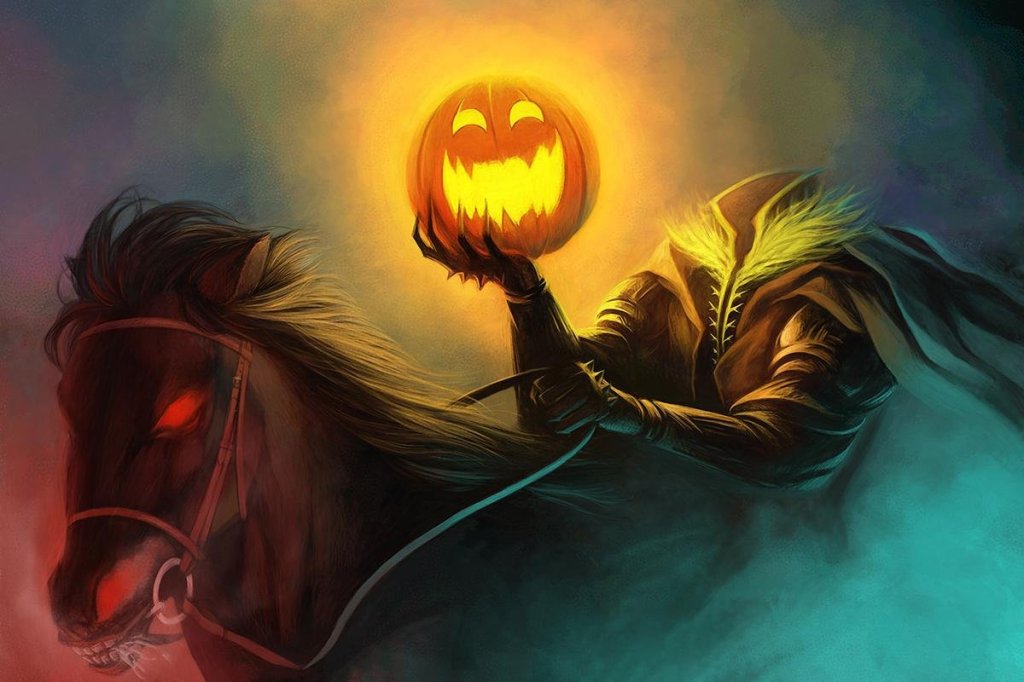
And then there’s this spooky footnote. One American success in the engagement was the decapitation of a Hessian soldier, his head taken off by a cannonball. He was buried in a churchyard nearby. Some years later, he would become the inspiration for an author named Washington Irving, who created a story so scary-successful it is celebrated to this day.
So if you are anywhere near White Plains this weekend, keep your eyes peeled for one of the spookiest casualties of the American Revolution.
It’s the Headless Horseman of Sleepy Hollow.


Leave a Reply